Smartphones have changed the way people take photographs. A modern phone can capture everyday moments, travel scenes, food, products, pets, landscapes, and short videos without requiring a dedicated camera. However, the built-in smartphone camera is still limited by the physical size and design of its lenses.
Clip-on smartphone lenses offer one way to experiment with different perspectives without carrying a traditional interchangeable-lens camera system.
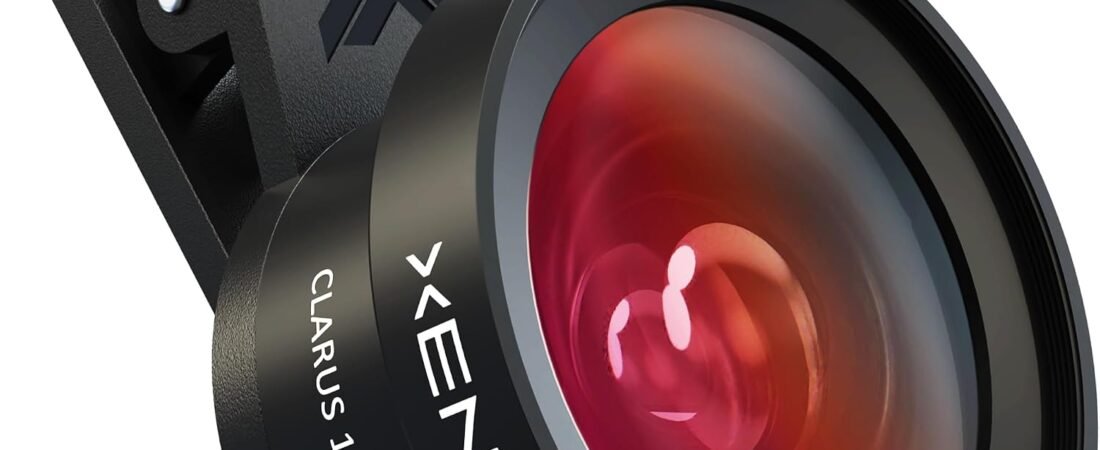
The Xenvo Pro Lens Kit for iPhone and Android combines a macro lens, a wide-angle lens, an LED light, a clip-based mounting system, and a travel case. The concept is straightforward: attach an external optical accessory to a compatible smartphone camera and use the additional lens to change how the phone captures a scene.
This type of kit can be useful for people who want to explore close-up photography, capture wider compositions, photograph products, document small objects, or experiment with smartphone content creation.
It is important, however, to understand what a clip-on lens can and cannot do. An external lens does not transform a smartphone into a professional interchangeable-lens camera, and compatibility depends on the phone’s camera arrangement, case, lens position, and physical dimensions. Image quality can also vary according to lighting, alignment, the smartphone camera being used, and how the accessory is positioned.
This guide explains the main components of the Xenvo Pro Lens Kit, how macro and wide-angle lenses work, practical applications, setup considerations, compatibility issues, and how a clip-on lens kit compares with other mobile photography accessories.
Understanding Smartphone Clip-On Lenses
A smartphone camera has a built-in optical system consisting of a lens, sensor, and supporting image-processing hardware.
A clip-on lens adds another optical element in front of the phone’s existing camera.
The additional lens changes how light enters the smartphone camera, altering the field of view or allowing the camera to focus on subjects at a different distance.
This can create photographic possibilities that may not be available through the phone’s standard camera alone.
A wide-angle lens generally allows more of a scene to fit into the frame. A macro lens is intended for close-up photography, allowing small subjects to occupy a larger portion of the image.
The effect is different from simply zooming in or cropping a photograph afterward.
Key Features of the Xenvo Pro Lens Kit
Macro Lens
The macro lens is designed for close-up photography.
Close-up photography can be difficult with a standard smartphone camera because the camera has a minimum focusing distance. Move too close to a small object, and the phone may struggle to focus.
A dedicated macro attachment changes the optical configuration so that the phone can focus on very close subjects.
This can make ordinary objects look substantially different.
Potential macro subjects include:
- Leaves
- Flowers
- Jewelry
- Coins
- Textures
- Fabrics
- Small electronic components
- Food details
- Insects
- Craft materials
- Collectibles
- Product details
The macro lens can therefore be useful for photography that emphasizes texture and small details.
Wide-Angle Lens
The wide-angle lens is designed to expand the amount of a scene that can fit into the frame.
This can be useful when the photographer is physically close to a large subject or when stepping backward is difficult.
For example, a wide-angle lens can help when photographing:
- Buildings
- Landscapes
- Interior spaces
- Group scenes
- Travel locations
- Architecture
- Large objects
- Rooms
- Street scenes
A wider perspective can also change the visual relationship between foreground and background objects.
Objects close to the lens may appear more prominent, while distant elements can seem farther away.
This makes wide-angle photography not simply a matter of fitting more objects into the frame but also a tool for creating a different visual perspective.
Clip-Based Mounting System
A clip-on lens does not require permanent modification to the smartphone.
The lens can be attached to the phone’s camera area and removed when it is no longer needed.
This is one of the practical advantages of clip-on accessories.
A user can keep the lens in a travel bag or small case and attach it when a particular photographic situation calls for it.
The exact alignment is important, however.
The external lens should be positioned over the intended smartphone camera rather than partially covering it or sitting off-center.
LED Light
The included LED light provides an additional source of illumination for photography and close-up work.
Lighting can be particularly important for macro photography because the phone and external lens may be positioned close to the subject, potentially blocking some ambient light.
An LED accessory can provide additional illumination in situations where the existing room light is insufficient.
The quality of the final image still depends on the position, intensity, color characteristics, and direction of the light.
A small LED can also create hard shadows when positioned very close to the subject, so experimenting with its angle can be useful.
Travel Case
A protective travel case provides a practical place to store the lenses and related accessories.
This is particularly useful because small optical accessories can be scratched or misplaced easily.
Keeping the lenses in a case can help protect them from dust, fingerprints, and contact with other objects in a backpack or camera bag.
Using the Macro Lens
Macro photography requires a different approach from normal smartphone photography.
When using the standard phone camera, users often move closer until the subject fills the frame. With a macro lens, the working distance becomes an important part of the composition.
The phone needs to be positioned within an appropriate focusing range.
Instead of continuously moving closer, try moving the phone slowly toward or away from the subject until the details appear sharp.
Once focus is achieved, even small movements can change the result.
This is especially noticeable with very close subjects because the depth of field can become shallow.
Macro Photography Ideas
Nature
Leaves, flower petals, tree bark, seeds, and other natural textures can become interesting macro subjects.
Small details that are normally difficult to notice can become the main focus of an image.
Food Photography
Macro photography can highlight the surface texture of food.
Bread crust, fruit, spices, desserts, herbs, and other ingredients can create visually interesting close-up images.
The LED light may be useful when photographing food indoors, although the photographer should consider whether the additional light creates unwanted reflections.
Product Photography
A macro lens can help capture details on small products.
For example, a photographer might document:
- Product textures
- Labels
- Stitching
- Small components
- Surface finishes
- Craft details
This can be particularly useful for online sellers or content creators who need close-up images for articles and social media.
Crafts and Hobbies
Small models, artwork, jewelry, miniature objects, and handmade items can benefit from close-up photography.
The macro lens allows the photographer to explore details that may not be obvious in a standard photograph.
Using the Wide-Angle Lens
Wide-angle photography is useful when the scene does not fit comfortably into the phone’s standard field of view.
Imagine standing inside a small room.
Moving backward may be impossible because there is a wall behind you. A wider lens can allow more of the room to appear in the photograph without physically moving farther away.
The same principle applies to large buildings, landscapes, and groups of people.
Travel Photography
A wide-angle attachment can be useful when photographing landmarks and city streets.
It can help capture more of the surrounding environment while keeping the main subject within the frame.
This can create photographs that communicate not only what a landmark looks like but also where it sits within its surroundings.
Architecture
Buildings can be difficult to photograph from close distances.
A wider perspective can help capture more of the structure.
However, wide-angle lenses can introduce perspective distortion, particularly when the phone is tilted upward or downward.
Straight architectural lines near the edges of the frame may appear to bend or lean depending on the lens and camera configuration.
Interior Photography
A wide-angle lens can be useful for documenting rooms, offices, apartments, studios, and other interior spaces.
Real-estate photography, home organization, renovation documentation, and interior design projects can all benefit from a broader field of view.
Users should be aware that external wide-angle lenses can sometimes produce noticeable edge distortion.
Understanding Perspective and Distortion
Wide-angle photography changes perspective.
This is not necessarily a problem. In many photographs, the exaggerated perspective is part of the visual effect.
However, it can become undesirable when photographing faces or objects close to the edge of the frame.
For example, placing a person’s face extremely close to a wide-angle lens can make facial proportions appear unusual.
For portraits, the standard smartphone camera may often produce a more natural perspective.
A wide-angle lens is generally more appropriate when the goal is to capture a larger environment.
Using the LED Light Effectively
Additional lighting can make a significant difference in mobile photography.
The LED included with the kit can be useful in low-light situations, particularly for close-up subjects.
However, simply pointing a light directly at the subject is not always the best approach.
Try different positions.
A light placed slightly to one side can create depth by producing highlights and shadows.
A light positioned directly in front of the subject can provide more even illumination but may reduce visible texture.
For reflective objects such as jewelry, glass, polished metal, or glossy packaging, direct LED lighting can create unwanted reflections.
In those situations, changing the angle of the light or moving the light source slightly away from the camera’s axis can help.
Smartphone Compatibility
One of the most important considerations with any clip-on lens is compatibility.
The product is intended for use with iPhone and Android smartphones, but not every phone camera arrangement is identical.
Modern smartphones can have several cameras positioned close together.
A clip-on lens needs to align with the intended camera.
Cases can also affect compatibility.
A thick protective case may prevent the clip from positioning the lens correctly over the smartphone camera.
If the lens appears off-center, the image may show dark corners, uneven sharpness, reflections, or other unwanted effects.
Before using the accessory extensively, verify that the clip fits securely and that the lens aligns correctly with the camera.
Choosing the Correct Smartphone Camera
Some smartphones have multiple rear cameras with different focal lengths.
The phone may include a standard camera, ultrawide camera, telephoto camera, macro camera, or other specialized sensor depending on the model.
When using an external lens, selecting the appropriate built-in camera can affect the final result.
For example, placing an external wide-angle lens over an existing ultrawide camera may create an unusually broad perspective or unwanted optical effects.
Likewise, an external macro lens is generally intended to be aligned with a camera that can operate appropriately with the attachment.
Experimentation can help determine which camera provides the cleanest image with the accessory.
How the Lens Kit Can Be Used for Content Creation
Smartphone photography is closely connected to social media and online publishing.
A small lens kit can provide additional creative options without requiring a separate camera.
Short-Form Video
A wide-angle lens can help capture more of the environment in short-form videos.
This can be useful for travel clips, demonstrations, tutorials, behind-the-scenes footage, and room tours.
Product Content
Macro photography can provide detailed shots for product-related content.
For example, a creator can capture close-up images of materials, buttons, connectors, textures, labels, and other details.
Food Content
The combination of close-up photography and additional lighting can be useful for food creators.
Macro images can emphasize textures and presentation details that are less obvious in ordinary photographs.
DIY Tutorials
A wide-angle perspective can show the overall workspace, while macro photography can document a small step or component.
This combination can be useful for repair guides, crafts, cooking tutorials, and other instructional content.
Using the Lens Kit for Product Photography
Product photography often requires careful control of composition and lighting.
A clip-on macro lens can help when a product contains small details that need to be visible.
Examples include:
- Watches
- Jewelry
- Electronics
- Handmade crafts
- Accessories
- Textiles
- Small tools
- Collectibles
The LED light can provide additional illumination, but natural window light or larger external lights may sometimes create a softer result.
For consistent product photography, a tripod can also be useful because it reduces camera movement and makes repeated shots easier to reproduce.
Who May Find the Xenvo Lens Kit Useful?
Smartphone Photography Enthusiasts
People who enjoy experimenting with mobile photography may find the two different optical perspectives useful.
Travelers
The compact format can be easier to carry than a larger camera and multiple lenses.
A wide-angle lens can help with scenery and architecture, while the macro lens can capture small travel details.
Content Creators
Bloggers, social-media creators, and video producers can use external lenses to introduce additional perspectives.
Small Businesses
Small businesses that photograph products using smartphones may find macro photography useful for showing details.
Hobbyists
Craft makers, collectors, model builders, gardeners, and other hobbyists can use macro photography to document small subjects.
Students
A macro lens can also have educational uses, allowing students to photograph textures, plants, objects, and other subjects at close range.
Important Things to Consider
Optical Accessories Have Physical Limits
A clip-on lens does not change the smartphone’s image sensor.
The phone’s sensor, image processing, software, and built-in camera continue to play important roles in image quality.
Lens Alignment Matters
Even a good optical attachment can produce poor results if it is not centered correctly.
Take a moment to check the alignment before taking important photographs.
Smartphone Cases Can Interfere
Thick cases, camera protectors, raised edges, or unusual camera layouts may prevent the clip from fitting correctly.
If necessary, test the lens with and without the case to determine whether the case affects alignment.
Lighting Remains Important
An external lens cannot compensate completely for inadequate lighting.
Macro photography in particular benefits from sufficient illumination because the subject is often very close to the camera.
Wide-Angle Lenses Can Distort the Edges
The broader the field of view, the more noticeable perspective and edge distortion can become.
Keeping important subjects away from the extreme edges of the frame can sometimes produce a more natural composition.
Keep the Optical Surfaces Clean
Fingerprints, dust, and smudges can significantly reduce image clarity.
Because the external lens sits directly in front of the smartphone camera, even a small fingerprint can create haze, glare, or reduced contrast.
Use an appropriate lens-cleaning cloth and avoid abrasive materials.
Protect the Lenses During Transport
Small lenses can be scratched if they are stored loose with keys, tools, or other hard objects.
The included travel case can provide a dedicated storage location.
Macro Lens vs. Smartphone Macro Mode
Some modern smartphones include a built-in macro mode.
A built-in macro system has the advantage of being integrated directly into the phone’s optical and software design.
A clip-on macro lens, however, can provide a different optical configuration and can be used with compatible phones that do not offer a dedicated macro camera.
The practical result depends heavily on the phone and external lens combination.
Users should compare the built-in camera’s capabilities with the external attachment rather than assuming one approach will always produce better photographs.
Wide-Angle Lens vs. Built-In Ultrawide Camera
Many modern smartphones already include an ultrawide camera.
This can provide a broader field of view without an external accessory.
A clip-on wide-angle lens can still be useful for phones that lack a dedicated ultrawide camera or for photographers who want to experiment with another optical perspective.
However, compatibility and optical quality depend on the specific phone and how the attachment interacts with its camera.
Clip-On Lens vs. Interchangeable-Lens Camera
A smartphone lens kit is much smaller and simpler than an interchangeable-lens camera system.
A DSLR or mirrorless camera can provide larger sensors, dedicated lenses, manual controls, and other capabilities designed for advanced photography.
A smartphone lens kit focuses instead on portability and convenience.
For travel, casual photography, social content, and experimentation, a clip-on accessory can provide additional options without requiring a separate camera body.
Clip-On Lens vs. Digital Cropping
Digital cropping removes portions of an image after it has been captured.
A macro or wide-angle lens changes the optical image before it reaches the smartphone sensor.
These are fundamentally different approaches.
A wide-angle lens can capture information outside the phone’s normal field of view that cropping obviously cannot create.
A macro lens can also change the focusing characteristics of the camera rather than simply enlarging an existing photograph.
Practical Tips for Better Results
Clean the Lens Before Shooting
Check both the smartphone camera and external lens for fingerprints or dust.
Use Stable Positioning
For macro photography, even small movements can affect sharpness.
A stable hand position or tripod can help.
Check the Corners
With wide-angle attachments, look at the corners of the frame before taking the final photograph.
Dark edges or distortion may become more visible there.
Experiment With Distance
Macro photography depends strongly on working distance.
Move gradually until the subject becomes sharp rather than assuming that getting closer always improves the photograph.
Use Additional Light Carefully
The LED light can help illuminate the subject, but try different angles to avoid harsh reflections and shadows.
Compose Before Shooting
A wider field of view can include unwanted objects.
Check the entire frame rather than focusing only on the main subject.
Use the Phone’s Camera Controls
Depending on the smartphone, manual exposure, focus, white balance, or other camera controls may provide additional creative flexibility.
The available controls depend on the phone’s operating system and camera application.
Frequently Asked Questions
What is the Xenvo Pro Lens Kit?
The Xenvo Pro Lens Kit is a smartphone photography accessory package designed for compatible iPhone and Android devices. It includes macro and wide-angle lenses, an LED light, and a travel case.
What is the macro lens used for?
The macro lens is designed for close-up photography.
It can be useful for small objects, flowers, food details, jewelry, textures, crafts, electronics, and other subjects where close focusing and magnification are desirable.
What is the wide-angle lens used for?
The wide-angle lens is intended to capture a broader portion of a scene.
It can be useful for landscapes, buildings, rooms, travel scenes, groups, and other subjects where the standard smartphone camera does not capture enough of the surroundings.
Does the kit work with iPhone and Android phones?
The product is marketed for both iPhone and Android smartphones.
However, individual phone designs vary considerably. Camera placement, case thickness, camera modules, and physical dimensions can affect compatibility and alignment.
Can I use the lens with a phone case?
It may be possible depending on the case and camera layout.
Very thick cases or cases with raised camera protection can interfere with the clip or prevent proper optical alignment.
Does the macro lens work with every camera on a multi-camera phone?
Not necessarily.
Modern smartphones can have several rear cameras with different optical characteristics.
The external lens needs to be positioned correctly over the intended camera, and the resulting image can vary depending on which built-in camera is selected.
Is the LED light useful for macro photography?
Additional illumination can be helpful because macro subjects are often photographed at close range.
The LED can provide extra light, although users should experiment with its position to avoid harsh shadows or reflections.
Can the wide-angle lens be used for portraits?
It can be used creatively for portraits, but wide-angle lenses can exaggerate perspective when the camera is very close to a person’s face.
For a more conventional portrait perspective, the phone’s standard camera may be more appropriate.
Can the macro lens photograph insects?
Macro photography can be used for insects and other small subjects, provided the subject remains still enough and the photographer maintains an appropriate working distance.
Wild insects may move quickly, so patience and stable positioning can be important.
Can this lens kit replace a professional camera?
No single clip-on lens kit replaces all of the capabilities of a dedicated interchangeable-lens camera.
The accessory is primarily a portable way to expand the creative possibilities of a smartphone.
Does a wide-angle lens eliminate distortion?
No.
Wide-angle optics can produce perspective effects and edge distortion, particularly with subjects close to the camera or near the edge of the frame.
How should I clean the lenses?
Use a clean, soft lens-cleaning cloth and handle the optical surfaces carefully.
Avoid abrasive materials or harsh cleaning methods that could damage the lens coating or surface.
How should I transport the lenses?
Keeping them inside the supplied travel case can help reduce exposure to dust, scratches, and accidental contact with other objects.
Is the lens kit useful for social media content?
It can provide additional perspectives for photographs and videos.
Wide-angle shooting can help with environmental scenes, while macro photography can provide detailed close-ups.
The final result will still depend on the smartphone camera, lighting, composition, and editing.
Can I use the macro lens for product photography?
Yes.
A macro lens can be useful for photographing small product details such as textures, labels, stitching, finishes, connectors, and components.
For consistent results, stable positioning and controlled lighting can make a significant difference.
Why are my photographs blurry with the macro lens?
Macro photography has a narrow focusing range and can be sensitive to small movements.
Try adjusting the distance gradually, holding the phone steady, improving lighting, and ensuring that the external lens is correctly aligned with the smartphone camera.
Conclusion
The Xenvo Pro Lens Kit for iPhone and Android offers a compact way to expand the photographic possibilities of a smartphone. By combining macro and wide-angle lenses with an LED light and travel case, the kit addresses two different photography needs: getting closer to small subjects and fitting more of a scene into the frame.
The macro lens can be useful for flowers, food, jewelry, crafts, product details, textures, and other small subjects. The wide-angle lens can help with travel photography, landscapes, architecture, interiors, groups, and environmental scenes.
The included LED light adds another practical option, particularly when photographing close subjects in less-than-ideal lighting. Meanwhile, the travel case provides a convenient way to keep the small optical accessories together when they are not being used.
The most important consideration is compatibility. Smartphones differ considerably in camera layout and case design, so the clip and lens need to align properly with the intended camera. Users should also remember that an external lens works together with the phone’s existing sensor, camera software, and image-processing system. Lighting, composition, stability, and cleanliness remain just as important as the accessory itself.
For someone interested in exploring mobile photography without carrying a larger camera system, a clip-on lens kit can provide a simple way to experiment with different perspectives. It can also be useful for content creation, product photography, travel, hobbies, educational projects, and everyday photography.
The key is to treat the lenses as creative tools rather than automatic image-quality solutions. Understanding their strengths and limitations makes it easier to use them effectively and choose the right lens for each photographic situation.